Me = I write, I edit, I speak Italian, I teach & I do some translation, too. Plus, I love these little sugar-dusted donuts that the Italians call ciambelle. Ciambelle = Chah-Mm-Bayl-Lay. Welcome & start reading!
Saturday, April 23, 2022
Kitchen music
Friday, April 15, 2022
Monday, April 11, 2022
Lost garden (Avon Journal)
April 11, 2021
Avon journal
My mother laments the state of the garden, but my father’s stewardship saw to it that the yard today is positively crowded with daffodils. And the magnolia tree is blooming, and a mourning dove is nesting on the ladder by the side of the garage. There are even flowers in the pots that line the alley. The garden is still vibrant, and the arbor (though overgrown and neglected) is still a triumph, a genteel structure that makes the backyard into an 8-year-old boy’s maze. Yesterday afternoon, Leo entertained himself by climbing my father's trees, riding his scooter in the alley and playing soccer with me; he was happy; resourceful; he loves the way the garden is lush with all kinds of flowers and trees. He rummaged a bit in the garage/shed (a little boy’s paradise); and he helped me pick daffodils after we arrived Friday night.
For Leo, nothing has changed and so maybe for me it is that way, too.
Lost diary entry
Sunday, April 03, 2022
4 months in, requiem (again) for the man who taught me 'requiem'
The journal I am filling now is labeled "5 December 2021 -- JOURNAL -- Babbo."
Babbo. Daddy.
It felt right to begin a new journal that day, the day he died. The day a new era, like or not, began.
Since then, we've recorded our first Christmas without him. We charged into a new year -- without him. And my mother has moved into a nursing home.
Time doesn't heal all wounds -- it distracts you, with new events, new worries, new frivolities. I suppose that's if you're lucky.
But there are still moments of wretched clarity. A few days after Christmas, I was listening to holiday music on the stereo after dinner -- something he would do -- and perhaps the buzz of the wine at dinner combined with the glow of an afternoon meander made me vulnerable and made it plain what I had somehow forgotten while walking, eating, tidying: He’s dead, gone, never coming back. Not anywhere I can reach. Not even estranged from me but still alive.
“The dead stay dead,” to quote, once again, the erstwhile Bennington poet, Donald Hall.
Put a different way: Requiem for the man who taught me the word 'requiem.'
(He loved to listen to requiems, my father).
Certain ideas become clear and they probably sound absurd to repeat but here goes one: Life was better before he died.
Well, of course, right?
But now I know that we've crossed a
border from which there is no turning back. And I mean, wow, what days those
were when he was still vigorous and bouncing my son on his knees.
Friends, you're wiser than me so you
probably knew to savor the moment when your child bounced on your father's
knee.
Driving home one day from my
mother's nursing home, I thought about his voice (as I mentioned in his second obit, it was an instrument that
could entertain, thunder, threaten and tease), thought about what it would
sound like to hear it, wondered if he could see me crying in my car.
I thought about how interesting I found him. How his
curiosity -- and the drive with which he pursued the objects of his curiosity
-- was formidable, how it completely informed me. Informed my life, my
personality. You could probably call me "vigorous" and it's borrowed
vigor. Learned vigor.
It’s like I wish someone had told me this: the part of your
life where your parents are still alive and well is what
matters. Afterwards? Yeah, well, ahem...
To be sure, they will also annoy you during those golden days! Kvetching, exerting pressure, advancing opinions you don't want to hear, or, in the case of my father, mentioning repeatedly "what you ought to do." (You = me).
But what's notable: you're still
making memories with them.
We've reached four months
without my father, and there are no new memories.
I've cried a proverbial river of
tears. But often the sentiment closest to my state of mind -- if I am lucky --
is sarcastic disbelief. “You gotta be fucking kidding me”: that’s my
actual thought when I stop and think that Daddy has died. When I spot his face
in the photo on my computer background, with that smug-but-friendly smile.
Him? They got him?
Scarcely seems possible.
And yet here we are.
Like I said, as I stumble through
what we may later call 'the first year after Daddy died,' I come to all kinds
of absurd conclusions -- like there ought to be a class for preparing
for your parents' decline and subsequent demise. Because when I care
for my mother now, I do everything wrong (or at least awkward, delayed, confused) and I believe it's because
I am in some ways shell-shocked. We spent decades teasing her but now I realize we
did so with the tacit conviction that she was still an awesome authority
figure. Still a full-fledged adult who didn't need us to do anything but act responsible
or set the table.
Now she's so vulnerable in every way
and I am unprepared for it all. This situation could go on for years and I
still think I would be expecting her to "be in charge." To remember
that today is Tuesday (or Saturday, as the case may be), to know that Leo is in
the fourth grade, to have activities she wants to pursue.
To end this blog post in a somewhat
cheery way -- or grimly cheerful -- I suppose I could say, "Consider the
alternative."
That I wouldn't be mourning him so
keenly. And I guess that is the cost of love. Life's greatest gift, which if
handled correctly will have you bursting into tears as you head for the Tappan
Zee, your mother's nursing home receding in the distance.
-30-
Tuesday, March 22, 2022
Ode to The Straight Story
I guess you could call it tears therapy. Or cinema therapy. Either way, it's also part two of this here Arts-in-Grief "newsletter":
You could say watching the movie, which first came out in 1999, was an exercise in controlled mourning.
It's an extremely simple film, old-fashioned in many ways (no special effects, limited use of soundtrack, straight-forward cinematography), but one of the best I've ever seen.
It's the story of an older gentleman living in the Midwest (and played by the absolutely fabulous Richard Farnsworth) who knows the years left to him aren't infinite so he sets out to see his estranged brother (played by Harry Dean Stanton; Sissy Spacek plays Farnsworth's daughter in a way that will break a part of your heart before the rest of the movie breaks what remains of your heart).
I re-watched it over a series of weeks last Fall. I wanted to be alone with my grief while I watched it, which meant daytime viewing, so I consumed the movie in snippets, when I had time -- and when I felt the need.
When I first saw the film, years ago, I don't know the moment in the film that tapped my tears -- perhaps simply the end. I only know during this most recent viewing, I cried the entire time, knowing how the film would culminate. That simple final scene is so powerful (I won't say anymore to avoid spoilers -- the trailer wisely avoids showing it).
I actually thought quite a bit during the days surrounding my father's funeral about the fate of those who are estranged from loved ones; when those loved ones die, I would imagine the grief must be almost insurmountable because there were no intermediate moments to attenuate the loss.
The irony: the copy of the movie I watched in the Fall is one I'd bought for my parents. They never watched it. Maybe they didn't need it. They weren't truly estranged from anyone. Just maybe their former selves -- and aren't we all?
Friday, March 18, 2022
When an ex-reporter like me tries to write fiction
“Well, is he crooked or not?
My editor didn’t bother waiting for me to walk across the newsroom to his desk. He'd spotted me the moment I turned the corner from the hall by the elevator into the large open space where all of us reporters and editors worked. I was reading an email from my father on my smartphone while nibbling a bagel. Another day in journalism – fielding quasi-existential questions while inhaling lunch on the fly after a news conference ran long.
I was sapped. But I had been on the beat long enough to understand his unspoken question.
Without looking him in the eye, I said, “You ever cheat on your wife?”
I could feel Joe smile immediately, as if to say, “Now we’re getting somewhere.” It was almost as if I were able read his thoughts – how he preferred saucy women reporters to the men who wandered into the field with a sense of entitlement even though he wasn't going to object too much to the routine promotions of said men.
He allowed himself -- and me -- a small chuckle. “Not if I can help it.”
“Exactly.”
“Exactly what?” Looking at his watch, he picked up some papers from his desk. “I have to go into a roomful of editors right now and they’re going to want to know if the Mayor is crooked enough to put on the front page.”
“I know. And I’m telling you he might be as crooked as you are. Or he might be a helluva lot more crooked. Just can’t tell yet.”
The police scanner blared with static, and then the dispatcher's voice emerged. “Stay on the line caller,” she said, then nothing, followed by, “Caller advises that her husband has locked himself in the bathroom with a handgun and a three-year-old child…..”
We listened for a moment instinctively, then ignored it. Not our problem. Our corner of the City Desk didn't deal with the cop beat.
Friday, March 11, 2022
NYT: "Watching the U.S. Election While Irish" (file under 'articles I love')
This is the art of writing a newspaper column -- or an op-ed -- at its finest:
https://www.nytimes.com/2020/11/13/opinion/cnn-election-ireland.html
And it's a perfect thing to post for St. Paddy's Day. I've been saving it for a while as you'll see.
Sláinte!
-30-
Sunday, March 06, 2022
To be denied their Dutchness (Auster)
From Paul Auster's memoir, The Invention of Solitude:
“Nearly everyone speaks excellent English in Amsterdam. This ease of communication, however, was upsetting to him, as if it would somehow rob the place of its foreignness. Not in the sense that he was seeking the exotic, but in the sense that the place would no longer be itself – as if the Dutch, by speaking English, would be denied their Dutchness.” (p. 83-84)
Exactly!
And the Italians indulging their sudden mania for English are denied -- are denying! -- their Italianness.
-30-
Wednesday, March 02, 2022
The Obituary We All Need (to Write)
I couldn't let the tiny, standard-issue obit that ran on the funeral website be the last word about my Dad. I had too many other things to say.
So my kind editor at Brevity agreed to run this piece (link below), the obituary I had to write. The extended version, you could say.
And yet! There is still so much more to say. For many reasons, I suppose, beginning with the most basic fact: he was my father.
But also: HE was a character. After a lifetime of hearing him label others with that comment, I have come to conclude that he, above all, was a character. And since I believe I take after him much more than I take after my mother, ours was a complex relationship.
I also concluded in one teary moment while driving back home to Connecticut that I really had a wonderful Dad. Me being me, I concluded it -- or better yet, admitted it -- far too late. And me being me, I realized it while reimagining a scene from my favorite movie, "It's A Wonderful Life." The angel, Clarence, says to George, "Don't you see? You really had a wonderful life."
In my version, he says, "You really had a wonderful Dad."
I really did, Clarence. A master gardener with an encyclopedia knowledge of classical music and also any American movie made before, say, 1965 (any Broadway play before that date, as well). A world traveler. And of course, an engineer, by career and also vocation. Plus: a devout Catholic who gladly recalled when the mass was in Latin. One more thought: one of the funniest people I ever knew.
To read the piece for Brevity, go here:
https://brevity.wordpress.com/2022/01/27/the-obituary/
-30-
Saturday, February 12, 2022
I've won an NEA literature grant for translation!
Third time's the charm, I guess.
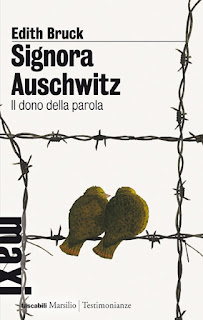
I've won a 2022 NEA translation grant to continue my work translating the short stories of an Italian author who was a peer of Primo Levi, and like him, a survivor of Auschwitz.
Her name is Edith Bruck. And here at left is one of the works I am translating. Due Stanze Vuote = literally, two empty rooms.
She's incredibly prolific, publishing nearly two dozen works of fiction, nonfiction and poetry.
I've published some of her poetry in translation -- you can find it here.
I've also done some research on her and other Italian women writers who have recounted their experiences of surviving the Holocaust. More on that at the website of the New York Public Library, where I had a fellowship last year:
It's tricky applying for these government grants but other translators out there need to know the staff of the NEA is there to help you.
To learn more about my project, you can go here:
https://www.arts.gov/impact/literary-arts/translation-fellows/jeanne-bonner
Monday, January 31, 2022
My mourning soundtrack
The mourning began before he ever died. Maybe that's the way it always is. In our case, my father lingered for more than a year, as he faded away from end-stage blood cancer. So much of what made him Daddy was wiped out in that year. I suppose once something is snatched from you, you begin to mourn. And I certainly feel his vigor was snatched from us, from me.
So I contemplated what had been lost through music during the long car rides from my home in Connecticut to the Jersey Shore when I would visit my parents and take care of my Dad. Sometimes I simply regressed to my teen years and trawled the dial for any kind of 80s music (I'd like to thank Joan Jett, Axl Rose, Prince and Billy Joel for their support in my time of need.). Or I would nestle myself into the sounds of the New York stations I knew growing up, especially Fordham's WFUV and Columbia's WKCR (many of the others I once loved are now defunct).
(Yes, yes it's all available via streaming, but listening to the radio in the car always feels right, and once I left the hinterlands of Connecticut behind me, it was a joy to tune into the NY stations -- the best of college radio, no doubt).
Listening to WKCR was particularly apt because my father was a big fan, and as I've mentioned here, the station blessedly still broadcasts shows recorded by Jazz aficionado Phil Schaap, even though he died in September. One day as I sped up the Garden State Parkway, I lucked into a Charlie Parker birthday marathon broadcast. (Oh lord I just grasped this idea: my father and Phil Schaap died during the same year! How odd, that tiny shard of a coincidence brings me a tiny shard of comfort. They are for better or for worse together among the People We Lost in 2021).
The car rides were necessary time machines, indulging my need for nostalgia, for returning to the years before illness changed everything. I'd always enjoyed my visits to their house on the Shore, impromptu mini-vacations that included trips to the beach and lots of conversation on the porch (my father even placed a lamp out there to read at night -- sheer delight). But in the past year (really two), these visits were turned over to pharmacy runs, grocery shopping trips, pill-counting drills.
In that interim space between leaving their house -- which had become a kind of purgatory, inasmuch as my parents were stuck in limbo, my father gravely ill but still alive -- and arriving back home to Leo (ideally with a smile on my face), I needed a few moments to reflect on the void I'd slid into. He was dying, there would be no reprieve and anything I'd planned now meant nothing.
And as I surfed the dial, my beloved 80s music, Phil Schaap's voice, and 1010 WINS traffic updates formed part of the soundtrack in the void (I'll gladly give you 22 minutes, my 1010 WINS friends).
Other times I sought out specific songs on my phone. A few tunes from my mourning soundtrack:
Adele's "Hello" ("I'm sorry for everything that I've done")
Maria Callas, "Casta Diva"
Paul McCartney and Wings, "Silly Love Songs"
Francis and the Lights, "May I Have This Dance?"
U2, "One"
U2, "Cedars of Lebanon"
Louise Attaque, "Du Nord Au Sud"
Handsome Boy Modeling School, "The Truth"
Luca Carboni & Jovanotti (live), "Mi Ami Davvero"
Vienna Boys' Choir, "Little Drummer Boy"
Chrissy Hynde, "Have Yourself a Merry Little Christmas"
John Lennon, "God"
Van Morrison, "Saint Dominic's Preview"
Amy Winehouse, “Tears Dry on Their Own,” (from “Amy Winehouse at The BBC”)
Smashing Pumpkins (cover), "Never Let Me Down Again"
The Grateful Dead, "Brokedown Palace"
Steve Winwood, "Take It to the Final Hour" (refrain: "What my father says...")
Elton John's "Your Song"
Bruce Springsteen, "Jungleland"
Ravel's "Bolero" (almost impossible for me to separate this work from my parents since it's probably the first work of classical music I can remember loving; I believe I'd already heard it by the time Torville and Dean used it -- to great effect -- in the Olympics)
*
During the final car ride home the night before he died, I played Stevie Wonder's "If You Really Love Me" over and over. It had popped into my head, for reasons unknown, and it plunged me into nothing short of a river of tears. I don't necessarily think the words apply to my specific situation -- my father loved me all right, he even said I was his twin! -- I merely think the desperate need for love at the story's heart reflected the particular ache of seeing my father so close to death. At times during his convalescence, I thought, 'Let this cup pass from Mommy.' But alas.
In another post, I will tell you the ways a movie called "The Straight Story" aided and abetted my precocious grief.
All of this probably means I like to wallow in grief, maybe even at times when it isn't truly grief engulfing me but simply stress or frustration.
But I think indulging the tears has helped me. Fellow grievers, do you hear me? You've lost something. And even if you're only in your car on the way back from school drop-off, acknowledge tearfully what has been snatched from you, and the high, holy cost of that theft.
-30-
Tuesday, January 25, 2022
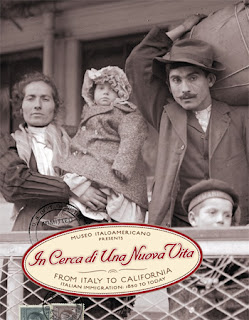
Caro diario (Day 7): Museo Italo Americano in SF
Writing in my journal this week -- in Italian. Join me? In Italian or any language. Eccoci:
Caro diario,
Sono ormai (purtroppo!) abituata a vedere parole e frasi in inglese quando leggo il giornale in italiano ma capita poco spesso che incontro la lingua italiana in America tramite i titoli del giornale o persino i nomi di negozi, ecc.
Ma a San Francisco c'è un museo dedicato all'arte italiana e italo-americana e si chiama Museo Italo Americano.
Cioè, non si chiama The Museum of Italian American Art o The Italian American Museum.
Invece ha il nome che avrebbe se si trovasse in Italia. Museo Italo Americano.
Non vi sembra forse che sia granché -- solamente il nome di un piccolo museo. Mica che presta padronanza dell'italiano a tutti quanti che ci vanno!
Ma come sai, caro diario, io sono ossessionata dagli anglicismi che si usano ormai ogni giorno nella lingua parlata, nei comunicazioni ufficiali persino dal dipartimento della sanità pubblica, nei giornali, ovunque.
Non ho modo di fare una visita nel prossimo futuro ma quanti ci vorrei andare!
Poi non è solamente un museo ma invece è un centro di studi italiani perché si offrono corsi d'italiano e gite in Italia. Ci sono anche degli eventi e colloqui vari.
Io non sono d'origine italiana ma mi sembra un ottimo motivo per imparare italiano. Io infatti vorrei imparare un po' della madrelingua del paese d'origine dei miei antenati: Irlandese. Più che altro per leggere una lapide funeraria di un mio parente nel cimiterio che avevo visitato tanti anni fa quando sono andata a trovare i cugini del mio nonno in Irlanda. Scritta totalmente in irlandese! E allora io non ho capito un tubo. Solamente il nome del mio parente.
Quindi non so -- se fossi italo-americana e avessi in programma di andare a San Francisco, farei un salto al museo. Prima o poi mi unisco ad un evento in rete tipo 'Cena e telechat,' pur essendo nel Connecticut. Un modo per darvi apoggio.
Maggior informazioni qui:
https://museoitaloamericano.org
-30-
Monday, January 24, 2022
Caro diario (Day 6): ho dimenticato!
Writing in my journal this week -- in Italian. Join me? In Italian or any language. Eccoci:
Caro diario,
Dovevo inserire un argomento o un post o qualcosa qui ieri, data la promessa che avevo fatto, ma ho dimenticato. Invece ho riscritto un saggio che parla del Giorno della Memoria. E ho pulito la casa. E abbiamo portato il cane a spasso. E alcune altre cose. Sai, la domenica. Tante faccende domestiche -- certo che di solito vanno trascurate mentre scrivo, scrivo, scrivo, però, ieri no.
Ma ormai mi sento immersa di nuovo nello splendore della lingua italiana. Il corso è cominiciato e gli studenti ci hanno messo l'impegno, almeno durante la prima lezione.
Perlopiù, sto leggendo LE OTTO MONTAGNE di Paolo Cognetti e quella lettura mi immerge nel mondo della montagna oltre al riempirmi la mente con parole (e domande!) in italiano.
Aggiungo un'altra cosa: mi sento immersa nell'attività di programmare le lezioni. Cioe, i miei pensieri rincorrono di continuo alla materia e i metodi che ci vogliono per imsegnare la materia (questa settimana roba elementare: buongiorno, buonasera, mi chiamo Jeanne, di dove sei, ti piace il cinema? Roba del genere). E per me, significa che mi sto impegnando, che sono all'altezza dell'incarico.
L'incarico, intendiamoci: far immergere gli studenti. Far coinvolgere nell'apprendimento dell'italiano. E innanzittutto far capire che l'apprendimento dell'italiano (oppure altre lingue) ti dà un'altra identità, ti permette di entrare in un altro mondo.
Elena Ferrante ha scritto nel suo romanzo La Figlia Oscura, “Le lingue per me hanno un veleno segreto.”
Io non direi 'veleno,' però fanno nascere una sostanza che può incantare. Ecco, voglio che gli studenti siano incantati dalla lingua italiana -- letteramente incantati.
Ti saluto ora e prometto che ci troviamo qui domani
-30-
Saturday, January 22, 2022
Caro diario (Day 5): Archivio dei diari
Writing in my journal this week -- in Italian. Join me? In Italian or any language. Eccoci:
Caro diario,
Scrivo di nuovo di un diario ovvero l'Archivio dei diari, il quale quando l'ho scoperto mi sentivo quasi scoppiare di gioia! Si trova in un piccolo paese nella Toscana dove c'è un museo -- un museo vorrei vedere in tutti modi.
Fu fondato nel 1984 a Pieve Santo Stefano vicino il confine tra Toscana, Umbria e Romagna, ed ora il paese è soprannominata "Città del diario."
(Di nuovo, a segnalarmi l'esistenza dell'Archivio era un numero di Airone! Mi ha fatto riscroprire il libro Anna e mi ha segnalato questo posto dove tutte le mie passioni combaciono: scrivere + diario + la lingua italiana)
L'Archivio punta sulla necessità di custodire la memoria -- sia personale che nazionale -- e ha come obiettivo "fare la nostra piccola parte per la causa della memoria." Sottolinea che questo posto esiste per "sostenere il peso della responsabilità della memoria."
La responsabilità della memoria.
E' un concetto molto importante, soprattutto per un paese come Italia dove sostenere la memoria nazionale significa che non si può trascurare periodi molto dolorosi come la Seconda Guerra Mondiale.
Non mi dovrebbe sorprendere che condivido tante idee con i responsabili del archivio, visto che innanzitutto proviamo un amore per il diario come strumento non solamente per coltivare la memoria ma anche per individuare piccole gioie quotidiane.
Il mio modo di vivere? Individuare, coltivare, custodire, celebrare piccole gioie quotidiane.
Ho tanta voglia di fare un salto a Pieve Santo Stefano, anche se fino a leggere il brano sull'Airone, non ho mai sentito dire. Ma pure solamente con un salto al sito web, ho potuto leggere estratti di diari e sono rimasta incantata dai diari che risalgono all'epoca della guerra. Per esempio:
Il credo dell'Archivio è questo:
“Nessuna storia è piccola.”
Io ci sto. Parlando ai lettori eventuali di questo blog, spero ovunque tu sia, stai facendo la tua piccola parte per coltivare la memoria, soprattutto la memoria di famiglia e della propria vita. Se non ci ricordiamo noi, chi si ricorderà? E per salvaguardare la memoria, bisogna scrivere o perlomeno registrare i pensieri.
Friday, January 21, 2022
Caro diario (Day 4): Cesare Pavese e il mestiere di 'poetare'
My plan? To write in my journal and to simply do so in Italian. Do you want to join me? In Italian or any language you want to practice. Here we go:
Caro diario,Oggi ti scrivo del diario di uno scrittore molto famoso e importante, Cesare Pavese. Immagina: il suo diario fu pubblicato! Sotto il titolo Il Mestiere Di Vivere. (Si, sono invidiosa, visto che scrivo anch'io un diario a cui tengo) È un libro molto interessante che lascio sul comodino cosi posso sfogliarlo quando mi viene voglia, e essendo un diario invece di un'opera di narrativa, va letto non come un libro, direi, ma invece come una rivista.
Pavese, come personaggio letterario, fu una persona fulminante e la sua vita fini in modo molto tragico: si ammazzò. Quando studiavo l'italiano all'università, ho letto La luna e i falò e mi piace molto.
Ma sul diario scrisse di tante cose, e questo brano qui sotto mi ha colpito per suo uso della parola 'poetare' (non avrei detto che fosse una parola, a dir la verità!):
“(29 dic.) Dei due, poetare e studiare, trovo maggiore e più costante conforto nel secondo. Non dimentico però che mi piace studiare in vista sempre del poetare. Ma in fondo il poetare e’ una ferita sempre aperta, donde si sfoga la buona salute del corpo.”
Che bello: poetare. Possibile che fu una parola usata nel 1935 o 1940 ma ora non si usa? Detto cosi, poetare mi sembra un bel impiego, un lavoro che vorrei fare. E ogni tanto, c'è da dire, scrivo una poesia. Ma la poesia è difficile! A volte mi vengono pensieri poetici, che non seguono la logica o struttura della narrativa. Ma poi appena scritta qualcosa non so che farne.
Comunque ti saluto qui, con un desiderio forte di poetare.
-30-
Thursday, January 20, 2022
Caro diario (Day 3): lo 'spartiacque' di Auschwitz
My plan? To write as if I am writing in my journal and to simply do so in Italian. Do you want to join me? In Italian or any language you want to practice. Here we go:
Caro diario,
L'anno scorso quando sono andata a New York per fare ricerca sulle scrittrici italiane che sono sopravvissuti ad Auschwitz o altri campi d'annientamento e hanno raccontato le loro esperienze, ho scoperto tanti libri fantastici.
Sono andata con lo scopo di tradurre dei racconti della scrittrice Edith Bruck ma anche trovare altri libri da scrittrici come lei, testimoni dello Shoah. C'ero perché avevo vinto una borsa dalla biblioteca pubblica a New York (New York Public Library -- NYPL).
Ho sfogliato un sacco di libri, compreso questo libro:
Dopo il fumo: Sono il n. A 5384 di Auschwitz Birkenau
L'ha scritto Liana Millu, autrice pure del libro Il fumo di Birkenau. E sfogliando il libro, ho trovato un brano che mi ha colpito -- il modo in cui lei percepisce la propria vita:
“Venne il funesto 1938 con le leggi razziali; poi la guerra, e con la guerra, uno spartiacque che da solo determina un “prima” e un “poi”: venne Auschwitz.”
Uno spartiacque che da solo determina un “prima” e un “poi”: venne Auschwitz. Una frase da mozzafiato. Significa che mentre gli altri forse usano le date di matrimonio o la nascita di un bambino per determinare i periodi importanti della propria vita, Millu fu costretta a ricordare Auschwitz come il punto di referimento maggiore sulla mappa dei suoi giorni.
Per modo di dire: non c'è un'uscita. Un club per la vita.
Mi sentivo a volte sopraffatta da quello che scoprivo durante il periodo di ricerca perché si tratta di un male talmente vasto e potente che mi fa paura anche a distanza di anni. Leggo la frase 'venne Auschwitz' e mi fa rabbrividire.
Sopraffatta anche perché ho da imparare tante cose e mi chiedo, come posso essere utile? Basta tradurre, basta studiare le opere di queste donne? Aiuta? Chissà.
Perché non posso mai capire fino in fondo la sensazione di quello spartiacque che divide la vita dei sopravvissuti in due.
-30-
Wednesday, January 19, 2022
Caro diario (2nd installment): 'Anna' di Ammaniti
Tuesday, January 18, 2022
Caro diario (Writing in Italian every day for a week)
Caro diario,
Il corso d'italiano che insegno questo semestre comincia giovedi.
Sono 3 anni che non insegno italiano. Tre anni sono tanti! Non è che siano 3 anni senza parlare italiano o scrivere in italiano -- sarebbe difficile immaginare una situazione del genere. Ma insegnare è tutta un'altra cosa. Dal mio punto di vista, è come giornalismo. Quando scrivo un articolo, devo capire cosi bene la questione/la materia che sto seguendo che posso poi spiegarla ad altri.
Quindi sono un po' nervosa. Mi innervosisco soprattutto quando penso che fra poco devo insegnare italiano di nuovo ma questa volta in masherina! Finora quando ho insegnato durante la pandemia si trattava di didattica a distanza. Imparare l'italiano è gia' difficile, io direi.
Wednesday, January 12, 2022
Translating the Untranslatable at the New York Public Library
The summary of my research project at the NYPL is up on the library's site and it's called "Translating the Unimaginable: Holocaust Imagery in the Works of Italian Women Writers."
And the studies I undertook as part of my short-term fellowship also comprise contemplating the unimaginable, the unbelievable, the almost untranslatable. Which is to say the Holocaust, the Shoah, the systemic slaughter of a particular group.
Imagine this: One of the books I requested to study is basically a directory of all the Jews deported from Italy during the war. It's called Il libro della memoria: Gli ebrei deportati dall'Italia (The Memory Book: Jews Deported from Italy).
It's an incredibly important tool for researchers, and represents enormous work on the behalf of the author, Liliana Picciotto.
But can you imagine? It's basically a phone directory of people carted off for slaughter -- a directory whose entries tell you whether the person was in fact slaughtered and where.
I also learned a lot about the particular plight of women in the camps -- a topic that hasn't at all been exhausted. They were torn away from children at a time when women were the primary caregivers. They weren't always slated for work detail so instead they were slated for death. If they were allowed to live, they were shorn of every physical detail that defined them as women -- at a time when women's appearance could define them. Some even gave birth in the camps.
I am sure I am like every other person who stumbles into Holocaust studies -- I feel like I must delve deeper, I must report on what I have learned, and I must continue to study the topic -- because I will never know enough. And we may never fully understand the genesis of this particular evil but we must try.
You can read the piece at the New York Public Library's website here:
I highly recommend the short fellowships, particularly as an independent scholar. They will give you a small stipend to study for two to four weeks in one of the world's most dazzling libraries, fetching every book you could possibly want and bringing it to a private study room.
This year's deadline is Jan. 31, 2022. The application can be found here.
-30-
Thursday, January 06, 2022
Surviving without Dad: Month One
I am writing today largely because of my fellow grievers who have so kindly come forward to offer comfort, some of them suggesting the posts I've written here about my father have resonated with them.
I am writing perhaps especially for those of us experiencing ambiguous grief, to steal Pauline Boss's term (please see Krista Tippett's interview with her from the NPR show, "On Being").
In our case, 'ambiguous' because while my father died a month ago, he ceased to be the person we'd always known at least a year ago -- so I haven't been grieving for simply a month. I've been grieving a kind of nebulous loss for a year -- he was still alive but since words trickled out of him during his final year on Earth and he did almost nothing but rest, the best part of him was dead to me, unreachable (note, I speak only for myself).
Yet I was still absolutely walloped by his passing! Wracked with sobs so deep, they seem to rise up from the Earth's core. Even yesterday!
It's hard to characterize how I'm doing; I am fine in many ways and beleaguered in other ways. Nothing original here. Like I said in my essay for Brevity last year, I am just one more person discovering the non-secret that our parents will die but I still have to say my piece.
Christmas went well (well-ish?), and I was fairly content, perhaps because we entertained my mother, which provided a perfect distraction ("Leo, don't let the dog lick Grandma's face.") Plus, I could surreptitiously write a bit in between chores and snacks. I even ran on the treadmill!
But still, I’m in a club I don’t want to be in. The club for fatherless people.
I've allowed myself moments of drowning in sorrow, especially on car rides. Actually the car has been my getaway to grief for more than a year. Books have triggered tears, too: especially The Invisible String by Patrice Karst, which before the homily at my father's funeral mass was entirely unknown to me. My cousin sent it to Leo afterwards, and another friend sent a copy, too, but I think it was more cathartic for me than Leo. Spoiler alert: if you're feeling wobbly, beware the page where the boy asks about "Uncle Brian in heaven." I can't make it through it without dissolving into tears. And my God, how true: we are connected to everyone we love, no matter where they are.
A part of me didn’t want to leave 2021 behind for one simple reason: I had an almost indescribable sensation of Daddy belonging now to 2021, since that’s the year he died.
He won’t be moving into 2022 with the rest of us.